
Almost every peptide store we audit has the same three words sitting somewhere on the page. Research Use Only. Sometimes it's in the footer, sometimes it's stamped on every product photo, and once we saw it in a font so large it was basically the logo. The thinking is simple: if you sell research use only peptides and say so clearly, nobody can accuse you of selling them for people. Ad platforms will relax. Regulators will move on.
They won't. That label is one line of text, and every reviewer who matters reads the other ten thousand lines around it. Your ad copy, your landing page, your product bundles, your Instagram comments, the testimonial you screenshotted from a happy customer. If those tell a different story than the disclaimer, the disclaimer loses every time.
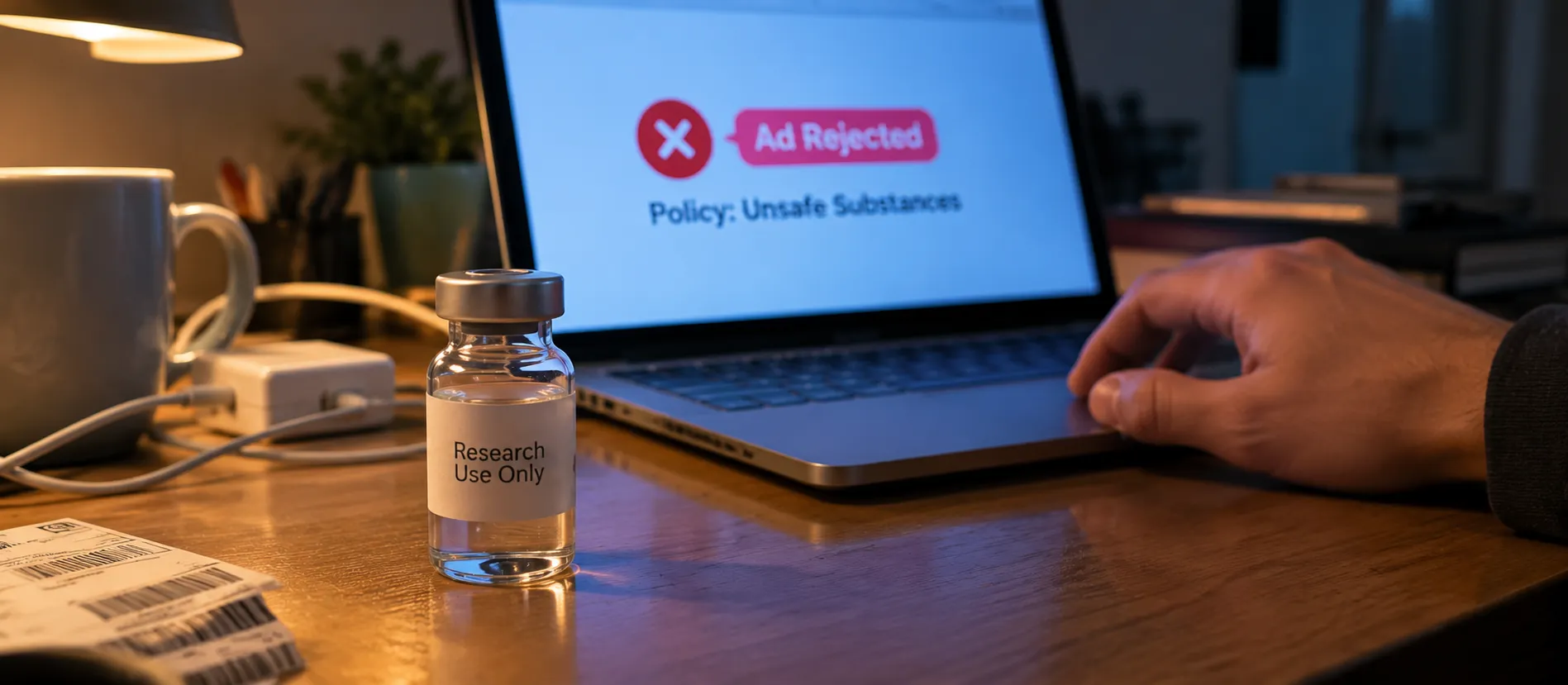
Does a "research use only" label protect your peptide ads? No. Ad platforms, the FDA, and payment processors all judge what a product is really for by looking at your whole funnel, not your disclaimer. Health claims, dosing tools, bacteriostatic water bundles, or customer results that point to human use will get ads rejected and can draw an FDA warning letter, label or no label.
What Does "Research Use Only" Actually Mean?
In the real world, a research use only label describes a product sold to labs for study. A university team testing how a peptide behaves in cell cultures is the textbook buyer. The label tells everyone the product isn't approved as a drug and isn't meant to go into a person.
Here's the thing, though. The label describes an intention. It doesn't create one. Regulators decide what a product is "intended" for by looking at how it's sold, and that idea has been written into federal rules (21 CFR 201.128) for decades. So when a store sells research use only peptides with a "fat loss stack" bundle and a dosing chart, the stated intention and the obvious one don't match. Guess which one counts.
If you're still fuzzy on the bigger legal picture, our breakdown on whether peptides are legal in the USA covers the ground this post doesn't.
Three Reviewers Who Ignore Your Disclaimer
People talk about "getting past review" as if there's one gatekeeper. There are at least three, and none of them stops reading at the footer.
The Ad Platforms
Meta's unsafe substances policy bans ads for products it considers unsafe "as determined by Meta at its sole discretion," and it names human growth hormones outright. Google's unapproved substances list is openly described as examples, not a complete list. Read those two lines again. Neither platform promises to check your disclaimer before deciding.
In practice, automated review scans the ad, the landing page, and the domain's history together. A clean ad for research use only peptides that points to a page mentioning recovery times or "results in 4 weeks" is a rejected ad.
- Ad copy and creative
- Landing page claims
- Restricted ingredient names
- Domain and account history
The FDA
This is where the label falls apart most publicly. In December 2024, the FDA sent a warning letter to Summit Research Peptides. The products carried research disclaimers. The agency quoted the company's product pages anyway, plus a Facebook post that read "Achieve Your Weight Loss Goals Faster with Cagrilintide & Semaglutide." That one social post did more damage than any disclaimer could undo.
Then in August 2026, four more sellers of research use only peptides received letters on the same day. According to Sheppard Mullin's summary, the FDA rejected the research use only language in all four and pointed instead to bacteriostatic water sales, dosing guides, and peptide calculators on the sites.
- Benefit and treatment claims
- Social media posts
- Reconstitution supplies
- Dosing guides and calculators
The Payment Processors
This one surprises people. LegitScript, the company many processors and platforms use for merchant screening, tells processors in its peptide guide that sellers who prominently say "not for human consumption" are, counterintuitively, more likely to be selling unapproved peptides. Your safety label can literally be the thing that flags you.
If you sell research use only peptides and lose your processor, your ads stop mattering, because nobody can check out.
- Loud disclaimers
- Open checkout, no buyer screening
- Consumer-style marketing
- Chargebacks and complaints
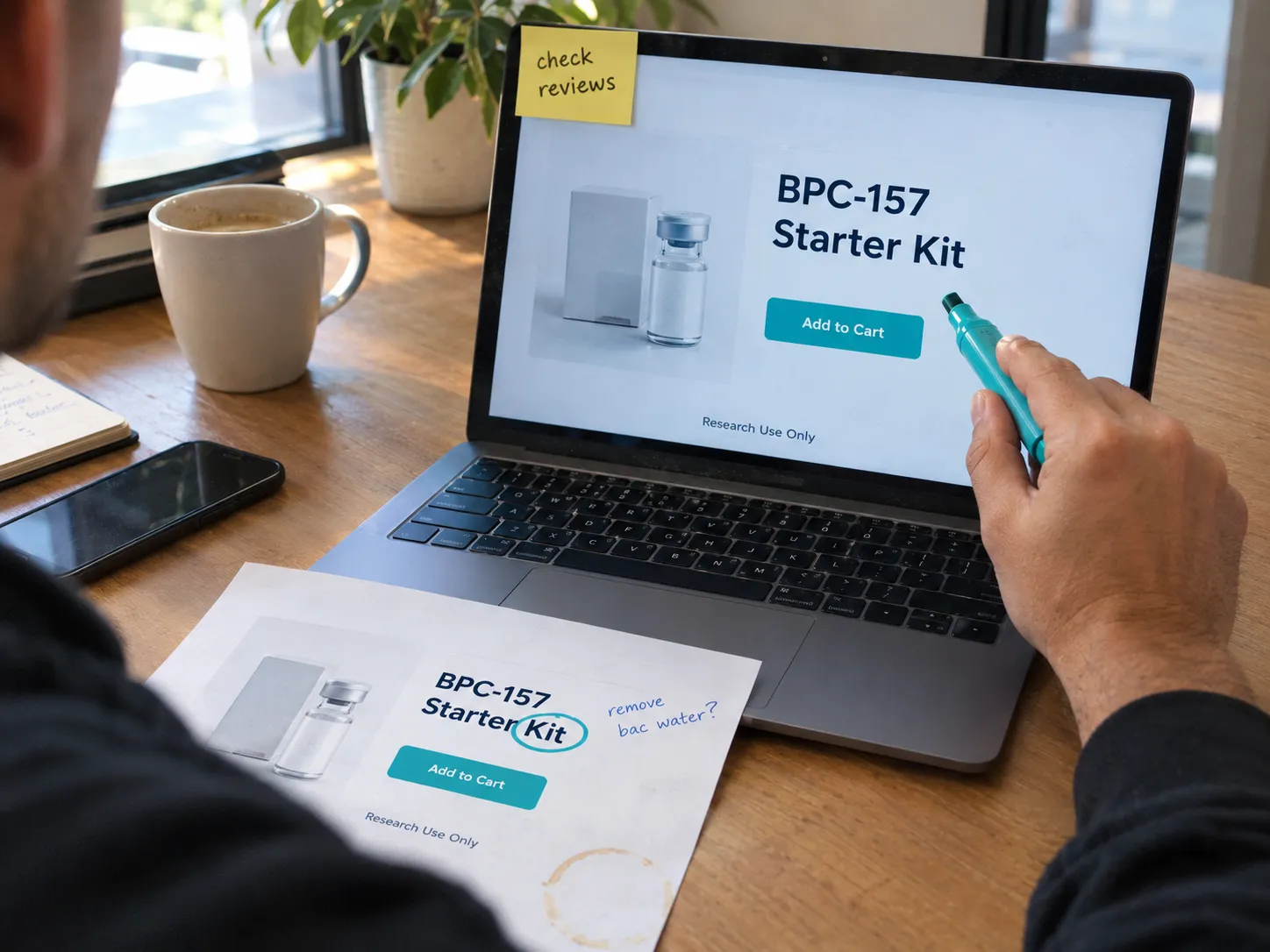
Why Research Use Only Peptides Still Get Flagged
When we pull apart a funnel that got a peptide brand in trouble, the disclaimer is almost always there. What's also there is a handful of signals that quietly say "this is for you, the person reading."
- Before and after photos, or reviews that mention how a customer felt
- Bacteriostatic water, syringes, or "starter kits" sold alongside the vial
- A dosing calculator or a downloadable protocol PDF
- Product names or bundles built around goals like "recovery" or "shred"
- Influencer content that shows the product being used
- Retargeting ads aimed at gym, weight loss, or anti-aging audiences
Any one of these can undo the label. Most stores selling research use only peptides that we review have three or four. And the uncomfortable truth is that a lot of them were added by a marketer trying to raise conversion rate, which they probably did, right up until the account went dark.
Is It Legal to Sell Research Use Only Peptides?
Selling research use only peptides to genuine researchers for genuine research is a real business. Labs buy these compounds every day. The trouble starts when the marketing is aimed at consumers while the label is aimed at regulators. That split is exactly what the warning letters describe.
What About the 2026 Compounding Vote?
You may have also seen news that an FDA advisory committee voted in 2026 to recommend BPC-157, TB-500, and a few others for the 503A compounding list. That's worth watching if you work with clinics. It doesn't change how ads are reviewed today, and the rulemaking could run into 2027 or 2028. Please don't rewrite your ad copy around a vote. (Quick note: we're marketers, not lawyers. Run your specific setup past a regulatory attorney.)
Adding a bigger disclaimer after an ad gets rejected rarely helps. If the landing page still carries human-use signals, a louder label can read as an admission, especially to payment processors.
Common Mistakes With Research Use Only Peptide Ads
Owners write bolder copy because the footer says RUO. That's backwards. The label raises the bar for everything else on the page.
Reviewers follow the click. A careful ad sending traffic to a page full of results talk gets rejected just the same.
The FDA quoted a Facebook post in a warning letter. Organic posts, captions, and replies to comments all count as marketing.
The store that seems to get away with it may simply not have been reviewed yet. Copying them copies their risk.
What Actually Keeps Peptide Ads Running
There's no magic wording that makes research use only peptides safe to advertise. What works is consistency. Your ad, your landing page, your product pages, and your social accounts need to describe the same business, and that business has to be the one you can defend.
If You're a True Research Supplier
Plainer product pages, real certificates of analysis, B2B-style language, and no bundles that only make sense for home use. Some suppliers go further and ask buyers to request a quote before ordering, which is exactly the kind of screening processors like to see.
If You Work With Clinics
Move the conversation to education and provider-led offers, and let the clinician handle anything that sounds like a treatment plan. We've written about running peptide ads on Facebook and Instagram with that kind of positioning, and the Google Ads vs. Facebook Ads comparison helps if you're deciding where to put budget first.
Build Channels an Ad Ban Can't Touch
Don't let paid traffic carry the whole business, either. Brands that grow a peptide brand on social media without getting banned and build an email list have something left when an ad account goes down. If you're earlier than that and still setting up the store, the basics of selling peptides online start with getting this exact positioning right from day one.
If Your Account Already Went Down
Start with our guide on what to do when your peptide ad account gets banned, then fix the funnel before you open a new one.

The Label Is the Last Line, Not the First
A research use only disclaimer is fine to have. It's just not protection. Platforms, regulators, and processors all read your full funnel, and they've shown again and again that they'll ignore three words on a label when the rest of the page says something else.
If you sell research use only peptides, make the whole business match the label. That's the only version of RUO that holds up when someone actually looks.
Not Sure What Your Funnel Is Saying?
Send us your ads and landing pages. We'll point out the human-use signals reviewers are likely to catch and show you how to fix them before your next campaign goes live.